




Updated April 2026
History, properly told, is a story. It’s the story of how ideas move through time — how one man’s theology shapes a civilization’s economy, how a queen’s decision reverberates a century later, how the gospel planted in one century bears fruit three centuries on. Get that story right, and your student doesn’t just learn facts. They learn how to see the world.
That’s what we’ve been trying to do with Dave Raymond’s four-year history series. And the parents who’ve gone through it with their kids tell us, consistently, that something different happens in a home where history is taught this way.
This post is a guide to that series — what’s in each course, how it fits into a homeschool transcript, how it compares to other solid options on the market, and what questions parents most often have before they start. If you’re trying to decide on a high school history curriculum for your Christian homeschool, I hope it helps.

How to Teach Lifelong Learning
Dave Raymond teaches history as a story — and the story, as he tells it, begins in Genesis and runs all the way to the modern world. His four-year series covers American History, Modernity, Antiquity, and Christendom, each earning one full high school history credit. Together, they give students a complete view of world history from a Christian worldview, not as an add-on devotional perspective but as the actual lens through which events are understood.
The key question Dave asks in every course is the same one he learned to ask from studying the humanities: What ideas drove this event? What did these people believe about God, man, and the world — and how did those beliefs shape what they did? That question is what makes his courses different from a conventional textbook, and it’s what parents mean when they say their students finally started to understand history rather than just survive it.
Dave describes his goal this way: he wants students to finish the series knowing what actually happened in the past — but more than that, to realize they’re just scratching the surface. “I want to develop a sense of lifelong learning,” he says. “I want them to be able to think through things biblically, think through things with Christian ethics in mind — and to realize that God has always been faithful and continues to always be faithful.”
Before we get into the individual courses, here’s Dave introducing the series himself:

Year 1 — Dave Raymond’s American History
American History is the first course in the series and the most natural starting point — though it can stand alone if that’s all you need. Dave covers the story of the United States from the earliest colonial settlements through Theodore Roosevelt, applying a Christian worldview to the people, events, theology, literature, art, and religious beliefs of the nation.
“My kids learn well from teachers who are passionate about their subjects. Dave Raymond is passionate about American History. Better yet, Dave Raymond is a good storyteller. Isn’t that what history is? Storytelling? Names and dates, bah! I want to know about the people, not just the battles. How did they think? Why did they do things? History comes alive in this video curriculum.” — Laura
What parents notice immediately is that Dave doesn’t present the American story as either triumphalist mythology or revisionist critique. He shows students how to think about history morally — what the founding generation actually believed, why those beliefs mattered, where they succeeded, and where they failed. That kind of nuanced, worldview-driven approach is what Tammy E. had in mind when she wrote: “FABULOUS! Students like that it details the ‘why’ and not just the ‘when’ of events. Has promoted lots of deep discussion.”
What’s included: 130 videos (five lectures per lesson, approx. 10–15 min each, 25 hours total) • 284-page Student Reader (original sources) • 106-page Teacher’s Guide • 4 projects • Weekly exams • Year-long portfolio • Dyslexia-friendly EPUB editions
Projects: Colonial Map of the Americas • Costumed Speech • Research & Thesis Paper • Creative project of student’s choice
Credit: 1 full High School History/Social Studies credit • Recommended grade: 8th–9th
Learn More & Try Free Sample Lessons

Year 2 — Dave Raymond’s Modernity
Modernity picks up where American History leaves off — but it isn’t a sequel in any narrow sense. Here Dave turns to the broader sweep of Western civilization from the late 17th century through the 20th, tracing the rise and maturation of modernity through philosophy, science, art, government, literature, and theology.
This is the course where students meet Newton, Bach, Napoleon, Austen, Wilberforce, Kuyper, Darwin, Bonhoeffer, and Churchill — and more importantly, where they begin to understand the ideas those figures embodied and contested. Dave doesn’t shy away from the darkness of the modern era. The French Revolution, the World Wars, the rise of totalitarianism, the Sexual Revolution — he addresses them with moral clarity rather than either sanitizing or sensationalizing.
“Overall we enjoyed Modernity and I am seeing improvement in my teen’s discussion and critical thinking skills.” — Alex
One reviewer who went through the course with her daughter — a woman with both undergraduate and graduate degrees from public institutions — put it this way: “I would like to learn history for the first time… Dave can get a LOT of information into 20 minutes.” That’s high praise from a credentialed adult who realized she was genuinely encountering the ideas of modernity for the first time alongside her teenager.
What’s included: 27 lessons, 47 hours of video • 308-page Student Reader • 122-page Teacher’s Guide • 4 projects • Weekly exams • Year-long portfolio • Dyslexia-friendly EPUB editions
Projects: Reformational Imitation • Speech on Tradition • Thesis Paper • Hour Project
Credit: 1 full High School History/Social Studies credit
Recommended grade: 9th–10th
Learn More & Try Free Sample Lessons

Year 3 — Dave Raymond’s Antiquity
Antiquity is the third year in the series, though we recommend starting with American History first. Dave begins with Genesis and traces world history through the life of Christ — synthesizing the biblical narrative with ancient history to show clearly how God’s providence was directing events long before the modern era.
Students who’ve done American History and Modernity first arrive at Antiquity with a more developed capacity to think historically. That maturity serves them well — the material is rich, the civilizations are strange (Mesopotamia, Egypt, Persia, Greece, Rome), and the worldviews being examined are sometimes disturbing. But the stakes feel even higher here: students are watching God’s redemptive plan unfold across millennia.
“Mr. Raymond points out that history is at its heart a story of the Gospel, but also of sinners. Even the ‘heroes’ of history have flaws — because they’re sinners — but he encourages students to watch for how all of history reveals the story of redemption, even through flawed and sinful people and actions. Through it all, God is working to accomplish His purposes.” — Kara
“My daughter loves how what she is learning in her class directly relates to what we are learning in our Bible studies. She also loves discussing how the class lectures present the Bible as history and not a story. It has led to many interesting discussions.” — Christabell S.
What’s included: 130 videos (five per lesson, approx. 20–25 min each, 44 hours total) • 212-page Student Reader • 122-page Teacher’s Guide • 4 projects • Weekly exams • Year-long portfolio • Dyslexia-friendly EPUB editions
Projects: Thesis Paper (completed mid-year) • Hour Project • Additional projects throughout
Note: Content covers pagan civilizations in depth. Recommended for students 14+ and parents are encouraged to preview the material.
Credit: 1 full High School History/Social Studies credit
Recommended grade: 10th–11th
Learn More & Try Free Sample Lessons

Year 4 — Dave Raymond’s Christendom
Christendom is the fourth and final year — the course that completes the story. Dave begins with the resurrection of Jesus Christ, explains the fall of the Roman Empire, traces the global civilizations of the Middle Ages, and ends with the Reformation and the English Civil War. The unifying theme is transformation: how Christianity changed everything it touched — art, government, science, worship, law, education, and daily life.
This is a course that tends to surprise students. They often think of the medieval period as a dark age — grim, backward, and boring. Dave shows them something else entirely: a civilization genuinely shaped by the gospel, full of beauty and intellectual ambition, building cathedrals and universities in the same century, wrestling seriously with questions that still matter.
“My high school senior just told me it’s his favorite curriculum he’s ever done.” — Kristin McKinnon
“It is an immense blessing to have had these courses available to us because we believe it’s so important to give our children a strong Christian Worldview at a time in history when this is being undermined in so many ways.” — Miriam
Christendom is also the capstone of the series as a whole — and students who’ve completed all four years arrive here with four years of accumulated historical and philosophical vocabulary. The payoff is real. Dave himself calls it “probably the best of these four years” — and “one of the most honest curriculums” he’s done, because it doesn’t sanitize the church’s failures any more than it minimizes her faithfulness.
What’s included: 130 videos (54+ hours total) • 226-page Student Reader • 102-page Teacher’s Guide • 3 projects • Weekly exams • Year-long portfolio • Dyslexia-friendly EPUB editions
Projects: Hour Project • Additional projects throughout
Credit: 1 full High School History/Social Studies credit
Recommended grade: 11th–12th
Learn More & Try Free Sample Lessons
Who Is Dave Raymond?
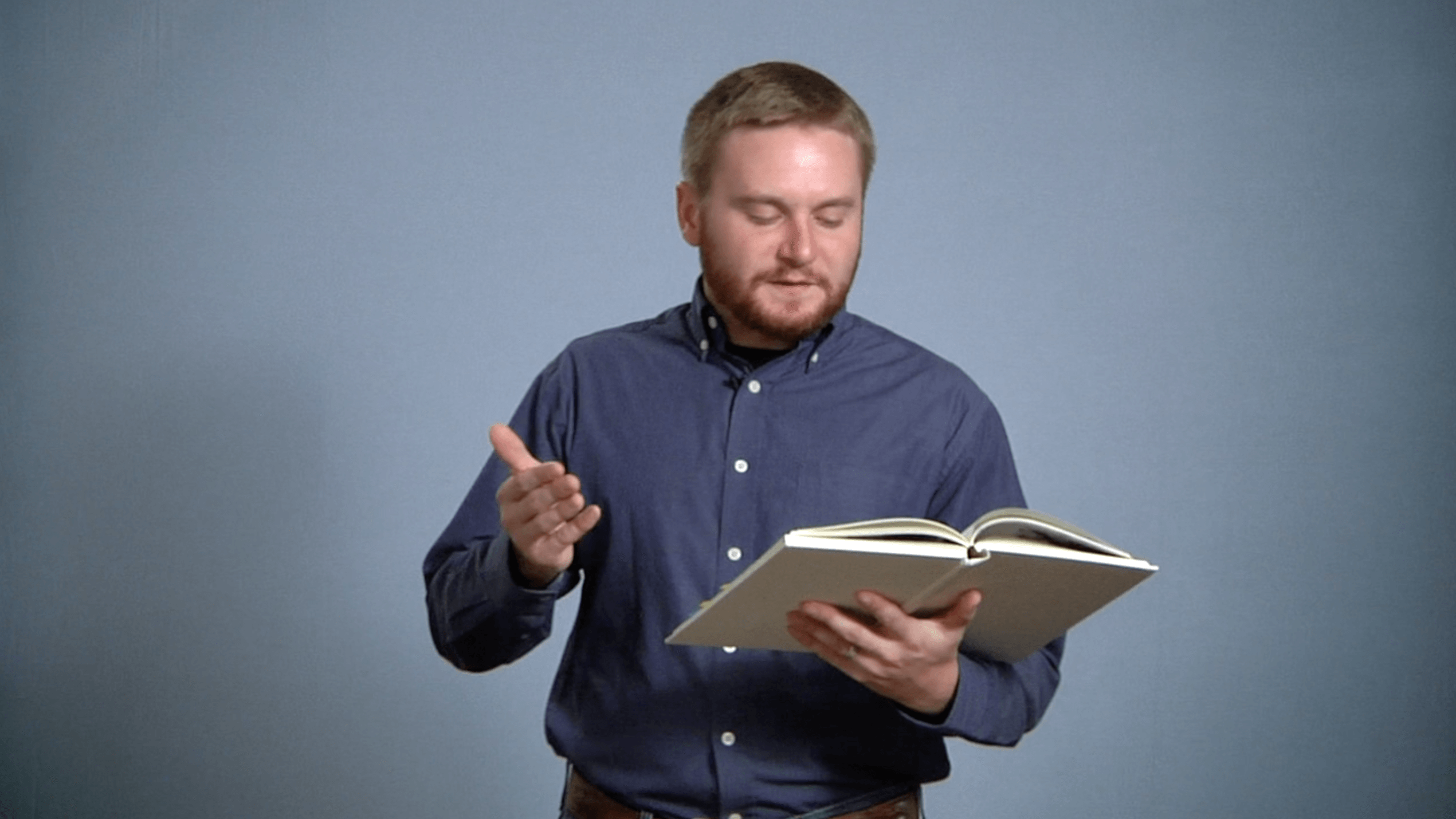
Dave Raymond lives in rural Middle Tennessee with his wife and six children. He has taught the humanities — history, literature, composition, civics, economics, and Latin — for the past 20 years, through Quiller Tutorials, Franklin Classical School, and Foundations Christian Academy. He is not a credentialed academic making lectures in a studio. He is a working teacher who has taught these courses to real students, in real classrooms, for two decades.
That background shows up in how he teaches. He knows what confuses students. He knows which ideas need the most unpacking. He knows how to tell a story that holds a teenager’s attention for 25 minutes — and how to close a lesson in a way that leaves the student wanting to know what comes next.
“Dave Raymond is fun to watch and listen to — no fluff — and the readings and assignments are applicable and grow the student’s understanding of the topic.”
“Amazing video lectures! Dave Raymond is very engaging and makes learning history extremely interesting.”
The Year-Long Portfolio
Every course in the series includes a year-long portfolio — and if there’s one question we field more than any other from new families, it’s about this. What is it, exactly? What does it look like?
The short answer: the portfolio is a unique, student-created scrapbook of the year’s history. At the end of each lesson, students add a portfolio page — but what goes on that page is genuinely open. A student who is an artist can sketch historical figures or architectural details. A student who loves writing can compose reflective essays or fictional diary entries. A student who is musically inclined can notate themes. The portfolio grows with the student’s own gifts rather than constraining them into a single format.
“The fact that my word-loving son can create a text-heavy journal, and my word-phobic son can create an image-heavy journal — and both are following the instructions — means a lot to me.” — Debra


For more examples of what portfolios can look like, our friends at Half an Hundred Acre Wood have shared an excellent post: The Making of a History Portfolio.
The Thesis Paper: A Capstone Worth Taking Seriously
Every course in the Dave Raymond series includes a thesis paper as one of its major projects. This is not a summary paper or a book report. It is a genuine argumentative essay: a student-chosen topic, a defensible thesis, supporting research from primary and secondary sources, and a coherent argument.
In American History, the thesis paper is introduced at Lesson 15 — students choose their topic, complete an outline, and submit the finished paper before the end of the year. In Modernity and Antiquity, the structure is similar: the paper is scaffolded across multiple lessons so students build it incrementally rather than all at once.
Why does this matter? Because a thesis paper is one of the strongest writing artifacts you can include on a high school transcript. It demonstrates that a student can identify a question worth asking, reason through primary sources, and construct a sustained argument — skills that transfer directly to college-level work. For families thinking about dual enrollment, college applications, or CLEP preparation, the thesis paper is a genuine asset.

Why Dave Raymond’s History Is So Transformative
It’s a fair question: why do so many families describe these courses in terms that go well beyond “we liked it”? What is it that makes the difference?
First, Dave teaches ideas, not just events. Most history curricula cover what happened. Dave covers why — and in particular, he traces the worldview behind the actions. Students leave his courses understanding that history is not random, that ideas have consequences, and that the gospel is not a minor subplot of human events but its central story.
Second, Dave models how to think historically. Each lesson opens with what he calls “The Principle” — a framework or guiding idea that helps students understand the lesson’s events in terms of larger patterns. This is classical education at its best: not just transmitting information but forming the student’s capacity to interpret the world.
Third, the primary source readings are serious. The Student Readers are not summaries of historical documents. They are the documents — Columbus’s journals, the Mayflower Compact, Robespierre’s speeches, Churchill’s addresses, the Westminster Confession. Students learn to read difficult texts and form their own judgments from what was actually written.
“I have to say, I absolutely LOVE this American History curriculum! Our family has been searching for something that doesn’t just teach the WHAT, but the WHY and the HOW. I love that this is both worldview and history in one curriculum.” — Meg
“This curriculum was an absolute Godsend to our family. We have never experienced a curriculum that our children loved, enjoyed and learned as much from as this one. Each morning my children were literally fighting over who got to start their History videos for the day.” — Kellie, 23-year homeschooling veteran
How Dave Raymond’s History Fits Into a High School Transcript
Each of the four Dave Raymond courses earns one full high school History/Social Studies credit. That means the complete four-year series represents four history credits on a transcript — a strong foundation covering American, Modern World, Ancient, and Medieval history from a Christian worldview.
Credit & Hours at a Glance
American History — ~25 hrs video + reader, portfolio, exams, projects = 1 HS credit
Modernity — ~47 hrs video + reader, portfolio, exams, projects = 1 HS credit
Antiquity — ~44 hrs video + reader, portfolio, exams, projects = 1 HS credit
Christendom — 54+ hrs video + reader, portfolio, exams, projects = 1 HS credit
HSLDA recommends approximately 150 hours per credit. Each course is designed to meet or exceed this standard when all components are included.
College readiness: The thesis paper, primary source readings, and analytical writing across the series are genuinely college-preparatory. Students who complete the full series arrive at college with four years of disciplined historical thinking behind them — not just content coverage.
CLEP: Dave Raymond’s courses are not designed specifically as CLEP prep, and we don’t market them that way. That said, a student who has completed a Dave Raymond course with serious engagement will have a solid foundation in the content covered by corresponding CLEP History exams, and families who add dedicated CLEP prep after the course often find the work much lighter.
Transcript documentation: Each course earns one credit in History/Social Studies. The Teacher’s Guide includes a Scope & Sequence and grading guide, which makes transcript preparation manageable even for parents who haven’t done this before.

What’s the Right Order? (And Does It Matter?)
The natural sequence is American History → Modernity → Antiquity → Christendom. We recommend this order for a simple reason: American History and Modernity deal with events and ideas that are more familiar to modern students, which gives them a framework and vocabulary to bring to Antiquity and Christendom. Ancient and medieval content is richer when a student already knows how to read history and how to think about ideas across time.
Antiquity in particular deals with content — including pagan religious practices — that we recommend for more mature students. That’s why we suggest taking it in year three rather than year one.
That said, American History can stand alone as a one-year course if that’s all a family needs. And families who have already completed one or two courses don’t need to start over — they can join the series at any point.

Pairing History with Literature: The Live Literature Classes
One of the things parents notice when they start planning around Dave Raymond’s series is that history and literature are not separate subjects — they’re the same conversation. The novel that comes out of a period illuminates the ideas of that period in ways that a lecture alone can’t. And the historical context that Dave provides makes the literature make sense in ways that pure literary analysis often misses.
That’s the thinking behind our four Live Literature classes, taught by Mary Pierson Purifoy. Each one is designed to run alongside the corresponding Dave Raymond history course, covering the literature of the same time period in depth.
| Dave Raymond History | Companion Literature Class |
|---|---|
| American History (Year 1) | American Literature Live |
| Modernity (Year 2) | Modern Literature Live |
| Antiquity (Year 3) | Ancient Literature Live |
| Christendom (Year 4) | Medieval Literature Live |
Each Literature Live class meets weekly over Zoom for one hour and earns a full high school Literature/English credit. The format is deliberately different from a traditional classroom. Mary Pierson opens with a short lecture placing the book in its historical and literary context, then moves into group discussion — closer to a book club than a lesson. Students are expected to form opinions, defend them, and engage with what their peers think.
The writing instruction is serious and scaffolded. Over the course of the year, students complete approximately 8–10 essays — five-paragraph essays, book reviews, research papers — with explicit instruction in how to build a thesis, organize an argument, integrate sources, and revise based on feedback. Students receive personalized written feedback on every graded assignment.
Each course can also stand alone — you don’t need to be taking the corresponding history course to enroll. But for families running the full Dave Raymond sequence, the pairing is natural: students spend their week in American History learning about the founding era, then come to American Literature Live to read Cooper, Twain, and Lee through the same historical lens. The ideas reinforce each other in a way that neither course achieves alone.
“No one has given us so many interesting historical backgrounds to make the books come alive.” — Robin

Getting More Support: Facilitated Groups
Dave Raymond’s courses are designed so that a student can work through them independently — and many do. But some families want more: an expert who knows the curriculum available to answer questions, a community of peers working through the same material, periodic live Zoom discussions, and a place to share work and get real feedback. That’s what our facilitated Groups provide.
Every Dave Raymond history course — and every Live Literature class — has its own dedicated Group on MyCompassClassroom.com. These aren’t passive forums. They’re active, moderated communities where students post questions, share project ideas, get encouragement from peers, and hear back from a facilitator who knows the course deeply.
Facilitators schedule and host periodic Zoom meetings for their Group — announced in the feed, joined directly from the platform. These aren’t lectures; they’re discussions of the course content, chances to ask questions live, and opportunities to connect with other students who are working on the same material.
The facilitators running these Groups know the material at the level the courses demand. They’re not generalist tutors fielding generic questions. They’ve worked through the primary sources, they know the projects, and they can engage substantively with what students are actually doing.
There is a Group for every Compass course — history, literature, Latin, economics, science, and more — each with its own facilitator and its own active community. View all Groups at MyCompassClassroom.com.
“The discussions and exchanges of ideas with Miss Purifoy and other students were also extremely enriching.”
— Moniko (on Ancient Literature Live)
Groups are available through our Compass Membership, which also includes access to all 40+ streaming courses, Student Readers, Teacher’s Guides, and audio resources. A two-week free trial is available.
One more thing worth mentioning: grading. For families who want external accountability on exams, portfolios, and projects — whether for transcript purposes, for a working parent who doesn’t have time to grade, or simply because an outside expert’s feedback carries more weight with a teenager — we offer personalized course grading as an add-on for each course individually. You choose which courses get graded; you don’t have to commit to grading everything. Graders know the curriculum, provide written feedback on submitted work, and produce grades you can use directly on a homeschool transcript.
Learn More About Membership
Learn More About Grading
Frequently Asked Questions
Can a non-historian parent teach this?
Yes — and this is one of the things parents most often report relief about. The Teacher’s Guide includes a Scope & Sequence, grading guide, and exam answer keys. Dave teaches the content. Your job as a parent is to watch alongside your student, discuss what they’re learning, and keep them on pace. Many parents tell us they learn as much as their kids.
How many hours does each course take?
Video content ranges from 25 hours (American History) to 54+ hours (Christendom). When you add the Student Reader, portfolio, weekly exams, and projects, each course is designed to meet or exceed 150 hours — the HSLDA standard for a full high school credit. Some students will spend more time in some areas, some less.
Will colleges accept this on a transcript?
Homeschool transcripts documenting Dave Raymond courses as one credit each in History/Social Studies are widely accepted by colleges and universities, including selective institutions. The rigor of the material, the primary source reading, and the thesis paper give the transcript genuine substance. Parents who are concerned about documentation should review our Teacher’s Guide and transcript guidance, and may also want to consult with their state’s homeschool legal organization.
Can my student work independently?
Yes, particularly from American History onward. The courses are structured so students can move through lessons on their own — watch the videos, complete the readings, take the weekly exam, maintain the portfolio. Parental involvement in discussion is encouraged but not required.
It’s also worth noting that the courses are adaptable. If you want to do exams verbally rather than written, you can. If you need to pick and choose from the primary source readings in a given week, you can. If your student needs a slower pace through a particular unit, that’s fine too. Dave built this flexibility in deliberately, and the Teacher’s Guide walks you through the options.
Is it secular or Christian, and how overt is the worldview?
It is explicitly Christian — not in a devotional or preachy way, but in the sense that a Christian worldview is the actual lens through which history is interpreted. Dave takes the Bible seriously as a historical document and as a guide for understanding human events. This is not a curriculum that adds Bible verses to conventional history content. The worldview is integrated throughout.
What is the “Costumed Speech” project in American History?
Students choose a historical figure from American history, research their life and speeches, and then deliver a speech in character — in period dress if possible. It’s one of the most memorable projects in the series and a natural introduction to the kind of public speaking that classical education has always valued.
Does the streaming access expire?
Yes. Each course comes with 18 months of streaming access from the date of purchase. Physical books are available as an add-on if you’d prefer printed Student Readers and Teacher’s Guides.
What if we’ve already done one course — do we need to start over?
No. Each course is designed to stand alone as well as work in sequence. If you’ve completed American History and want to add Modernity, you can start there. Students who complete the full four years will experience the richest and most coherent picture, but joining mid-series is absolutely fine.
Ready to Try It?
The best way to evaluate Dave Raymond’s teaching is to experience it. We offer free sample lessons for all four courses — see exactly how a lesson is structured and how Dave teaches before you commit.


